Spotify Playlists as an Asset: Earning From Curation and Automation in 2026
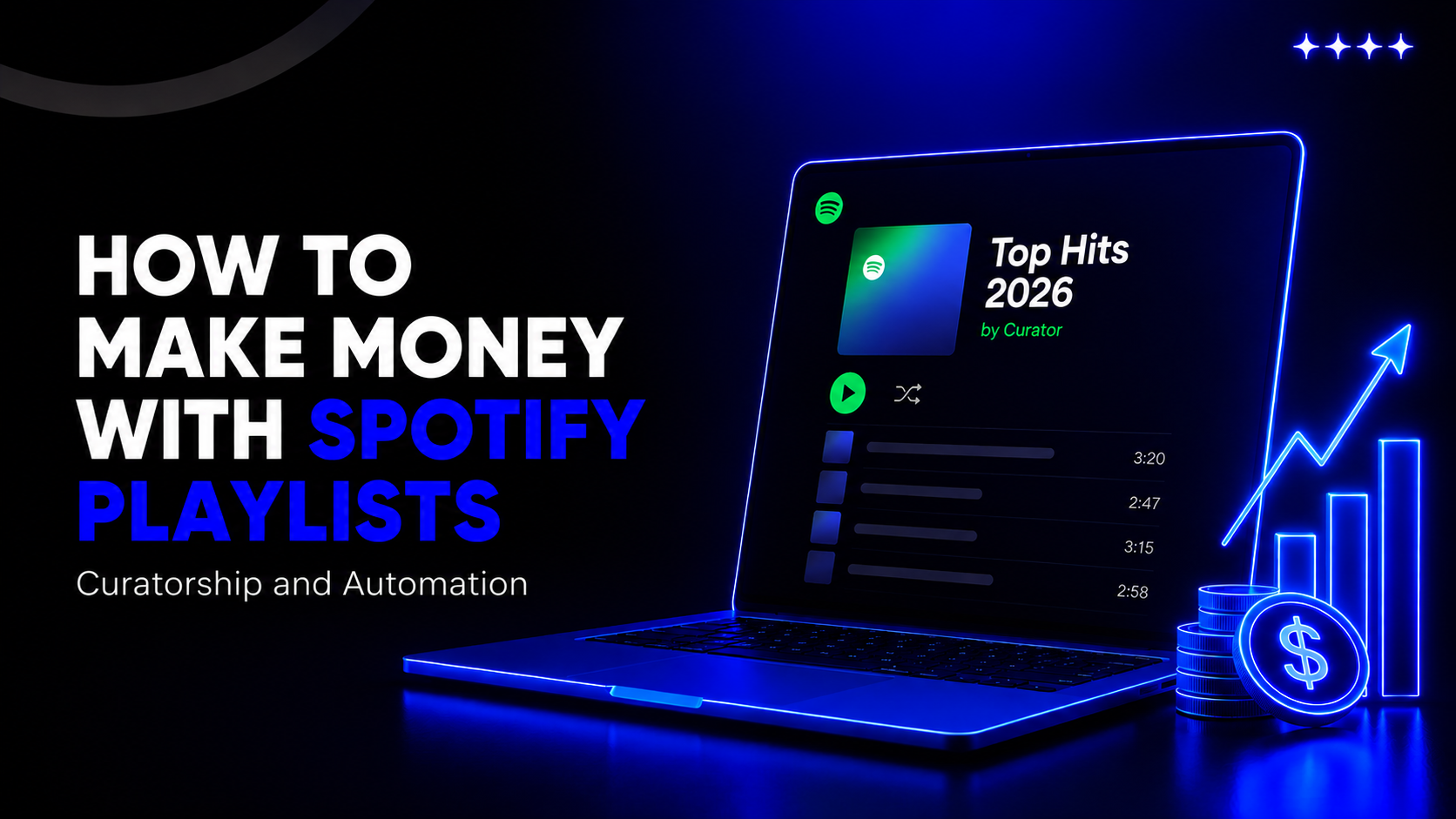
It turns out the habit of spending hours perfecting a playlist can pay off with more than the quiet satisfaction of a flawless track order. In 2026, the owner of a genuinely active playlist receives submissions from artists and gets paid to review them. The playlist stops being a personal hobby and becomes a small digital asset — one that keeps paying for months after you've stopped actively feeding it.
For an affiliate or media buyer, that's an interesting shift. We're used to the "buy traffic → send it to an offer → pocket the spread" loop, where every day starts from zero: stop the campaign, stop the income. Playlist curation works differently. Here you spend traffic once to build an asset, and that asset then monetizes itself as long as you maintain it. Below is how to turn an ordinary Spotify playlist into a source of income — and how to hand most of the busywork to AI agents and the API.
How playlist-curation income actually works
In classic affiliate marketing the funnel is linear: buy traffic, send people to an offer, get conversions, earn the difference. With Spotify playlists everything shifts in time. First you have to grow the playlist and gather a real, listening audience around it; only then do you plug in monetization.
Simplified, the model looks like this:
bring in listeners → grow the playlist → connect curator platforms → receive tracks from artists → listen and rate them → get paid for the review.
You build the asset first and start earning later. New music drops every day, independent artists constantly need those first plays, and they're willing to pay to get their track in front of a curator with a relevant audience. Artists rarely approach playlist owners directly, though — almost the entire market runs through dedicated curator services that connect both sides and handle payouts.
The one thing to understand up front: the curator is paid to listen to and rate a track, not to add it to the playlist. Spotify's rules explicitly forbid taking money for guaranteed placement or promising an artist a specific number of streams. So officially, only the review is paid — you listen, write feedback, make a call. Whether you actually add the track is your decision, and that addition is never billed separately. That framing is exactly what keeps the whole scheme on the legal side of the line.
One more expectation to set straight away: the playlist owner earns no share of the plays of other people's tracks. Royalties go to rights holders — artists, labels, publishers. Your income is payment for reviewing submissions, not a cut of the streams.
Unit economics: think like a media buyer
Here's where it gets interesting for anyone used to thinking in funnels and ROI. Let's break the economics down.
Income per playlist. One platform might pay about a dollar per review, another several dollars, depending on the playlist's metrics and its rating inside the service. Say five submissions land in your queue each day at an average payout of $2 — that's roughly $300 a month from a single playlist. The real number swings with genre, audience geo, playlist size and activity, your rating with the curator, and how many artists are running campaigns in that period.
Cost of entry. Most serious platforms open up at 1,000+ followers and a genuinely active audience. That's your entry threshold — the amount of traffic you have to buy or drive organically before the asset starts monetizing. If you push those first listeners with paid ads (say, Meta Ads to a landing page with a Spotify button), your cost per follower will vary widely by geo, creative, and playlist theme. Roughly speaking: acquiring that first thousand followers is your one-time cost, a mature playlist earns it back within weeks or months, and from then on it runs at a profit.
A portfolio, not one playlist. This is where the model starts to resemble media buying. One playlist is a hypothesis test. Ten playlists across different genres and situations are a portfolio — some assets grow, some plateau, and the winners carry the revenue. Same logic as creatives: scale what works, kill or rebuild what doesn't. The difference is that a winning playlist doesn't burn out in a week like a creative — it lives and pays for a long time.
Think in payback terms: what it costs to bring a playlist to monetization, how long it takes to recoup that, and how much it earns per month at plateau. Once those three numbers land in the green, the asset is worth replicating.
Choosing a niche and genre
Audience size matters, but what matters more is how many artists run paid campaigns in your genre. A 5,000-follower playlist in a niche with almost no campaigns will earn less than a 1,200-follower playlist in a genre where artists pour money in daily.
The best-performing lanes are the ones flooded with independent artists who need those first plays: electronic music and its subgenres, hip-hop and rap, indie, lo-fi and "focus" music, pop, ambient. "Situational" playlists work especially well — music tied to a specific activity or mood: working at night, reading, working out, a drive in the rain. Those themes are easier to promote (people search for them directly) and easier to fill.
Pick a niche at the intersection of three conditions: a steady stream of releases from independent artists, clear search demand inside Spotify, and a genre you personally don't mind listening to for dozens of tracks a week — the listening grind is unavoidable.
Curator platforms: where the submissions come from
Several platforms let playlist owners get paid to review tracks. Each has its own rates, requirements, and payout rules. The smart move isn't to pick one — it's to connect several at once, so your submission flow is steadier and not hostage to a single service. The main ones:
Groover
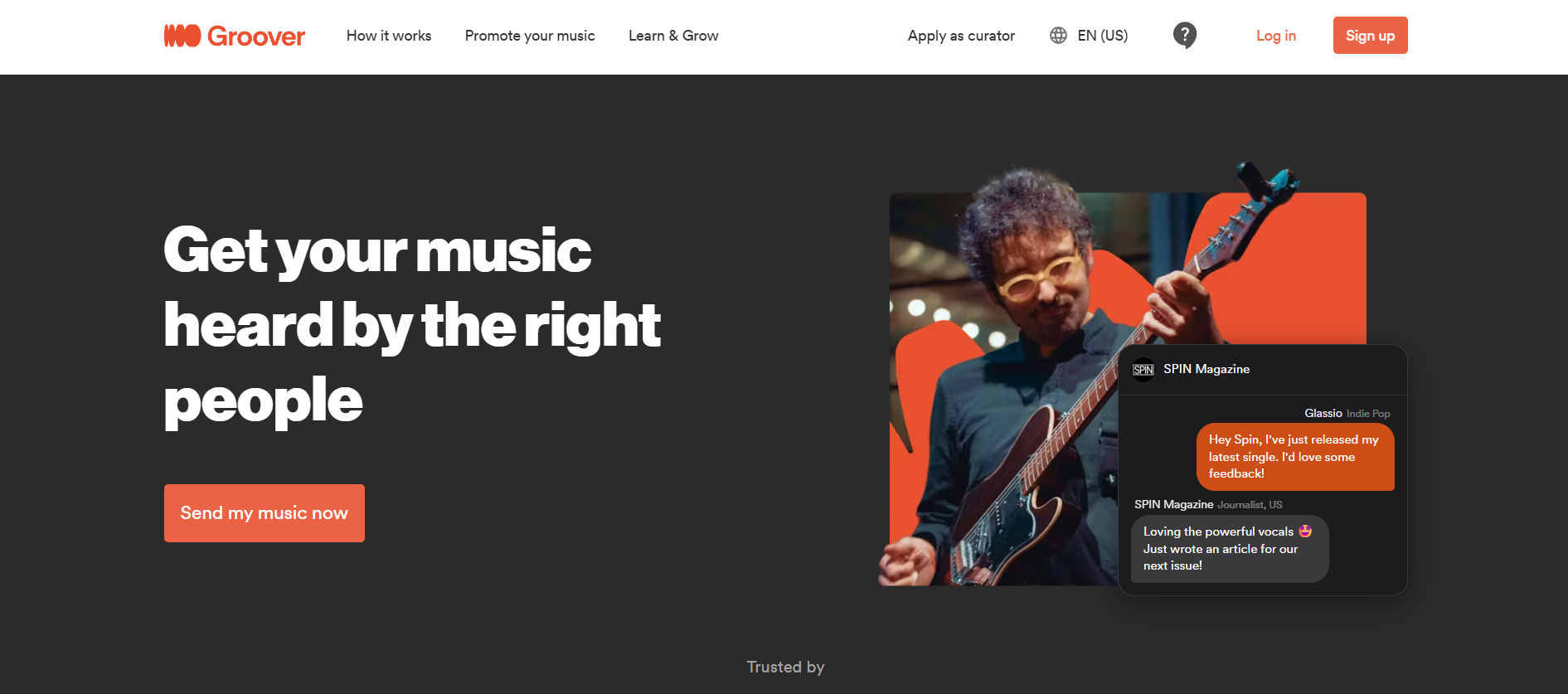
One of the most beginner-friendly platforms. You connect a playlist, pass moderation, and after approval start receiving tracks for paid review. Each reviewed track pays 1 Grooviz — €1 — whether you add the song or reject it.
Requirements: 1,000+ likes per playlist, 20+ tracks, independent artists, organic growth, real followers and listeners. Bots, fake engagement, task services, and mutual-listening groups are banned. You get 7 days per track; you must listen and leave feedback of at least 15 words, and explain your reasoning on a rejection.
First withdrawal is from €20, later ones from €50, via PayPal (a flat €2 fee) or bank transfer. You can also keep your Grooviz instead of cashing out and move them to an artist account to spend on promotion inside the service — transfers of 10+ Grooviz get a 20% bonus.
SubmitHub
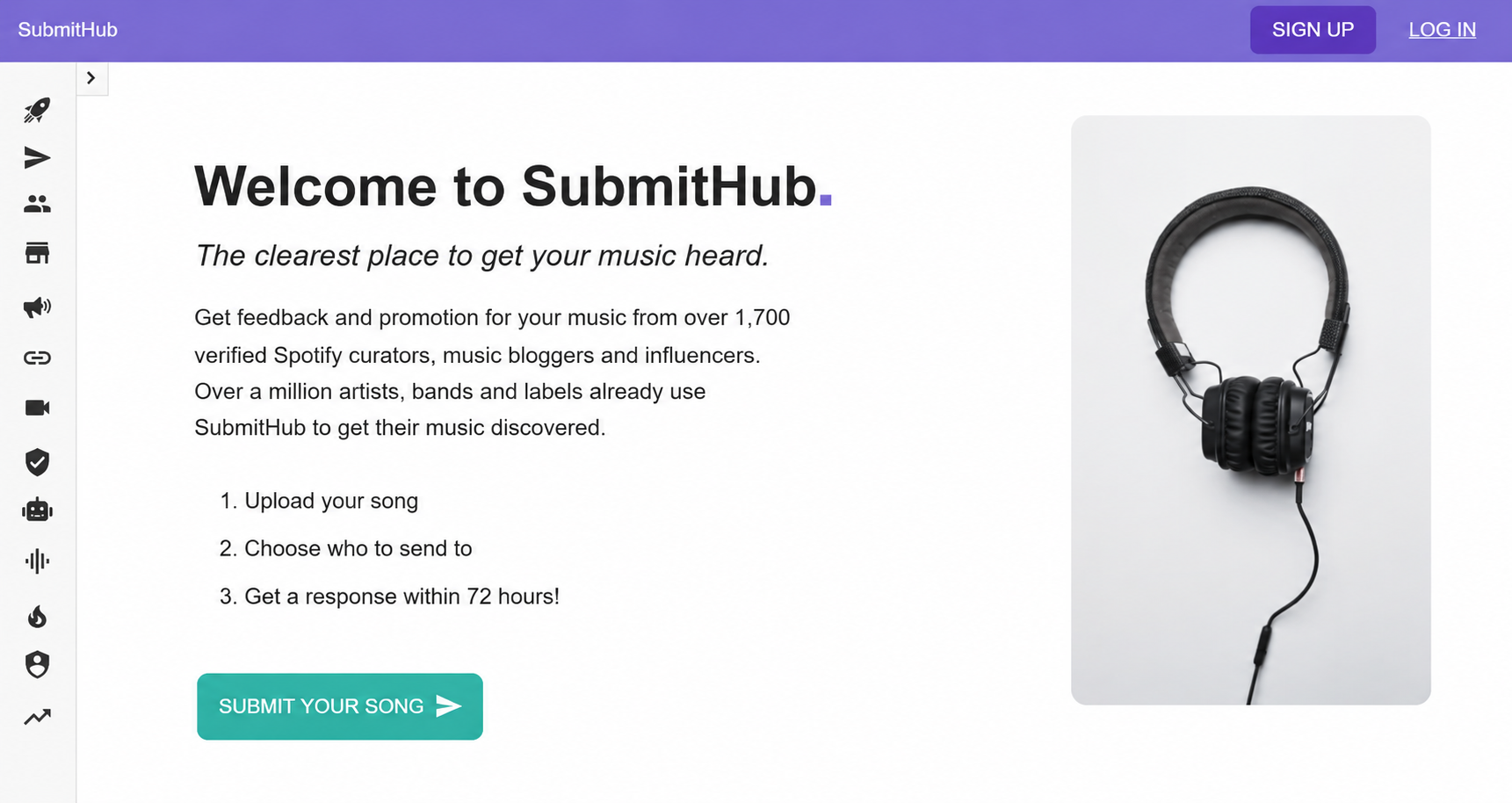
Here artists pick suitable curators themselves and send them tracks. After approval, your playlist appears in the catalog and starts getting submissions. There are free Standard submissions and paid Premium ones — you get paid for Premium.
There's no hard follower threshold: each playlist is vetted individually on organic growth, activity, and overall metrics. Your rating and submission price are shaped by response speed, listening time, feedback quality, absence of templates and AI-generated text, and the playlist's own stats. You have 72 hours to answer a Premium submission: listen at least 60 seconds and, on a rejection, write feedback of at least 20 words; in the no-written-feedback mode, listen at least 180 seconds. Miss the window or break the rules and the credit returns to the artist. Each Premium Credit pays the curator $0.50, and one submission can cost one to five or more credits — so a payout runs from $0.50 to $2.50 and up.
Playlist Push
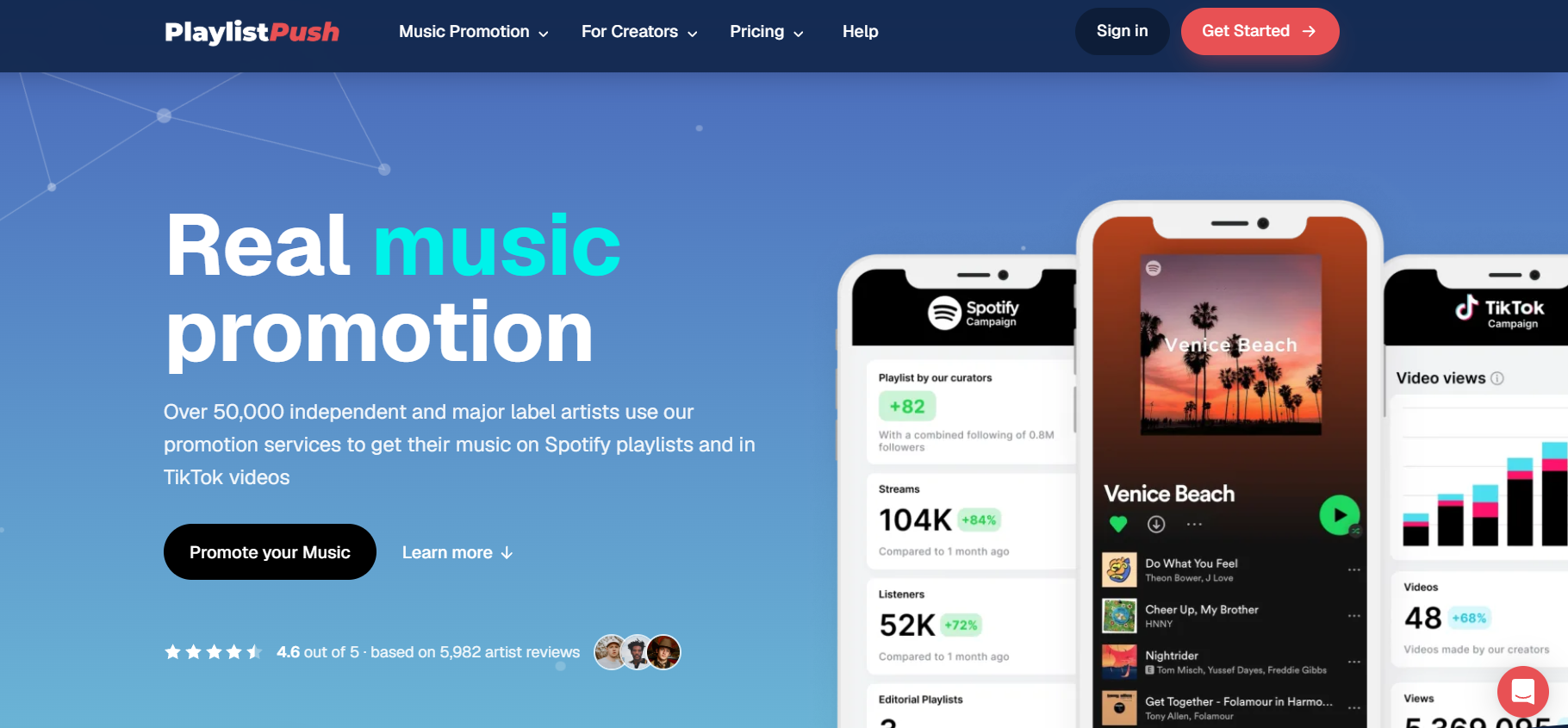
The system sends each track to curators whose playlists match by genre — no picking each one by hand. Requirements are strict: 1,000+ followers, 30+ monthly active listeners, active listeners at least 1% of followers, everything organic, no bots, fake engagement, or mandatory-follow schemes.
Some playlists aren't accepted at all: single-artist or single-album playlists, film and TV soundtracks, decade-specific collections, playlists with a follow-me call in the title, and ones constantly renamed to chase growth. There's also a geo limit — the program is available only in North America and Europe. Reviewed tracks pay $1.25 to $15, depending on your Reputation Score (driven by followers, active listeners, and your work inside the service). Payouts are weekly.
SoundCampaign
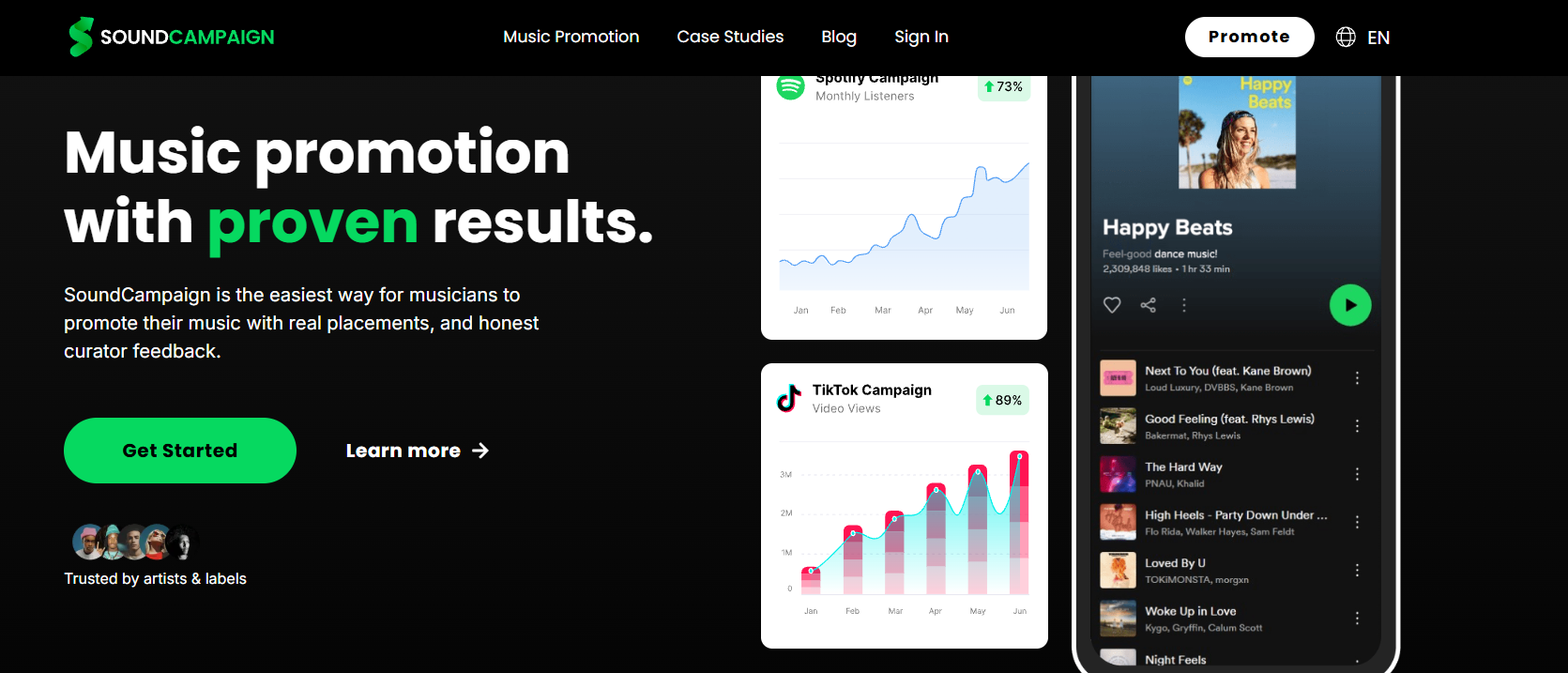
The service matches tracks to your playlist's genres. To connect: 1,000+ followers, at least 20 tracks, active listeners, an organic audience with no fake engagement. The playlist goes through automated and manual checks; while it's under review, each track pays $1.
After approval there's a 15-level system paying $1 to $14 per review. Your rating depends on followers and the results of added tracks (how many new plays and listeners they get). An added track must stay in the playlist at least 7 days — pull it early and the payout can be revoked. Feedback must be in your own words, no copy-paste; a valid artist complaint can cost you the payment. Minimum withdrawal is $20 via Wise, up to 10 business days.
DailyPlaylists (Premium Curators)
Monetization here runs through a separate Premium Curators program: artists buy Premium submissions and you get a share of the fee for reviewing them. To join, you need at least one playlist with 1,000 followers; then they assess layout, track selection, and activity.
The program has four tiers — Bronze, Silver, Gold, Platinum. Your tier rises with the share of Premium submissions you clear over the last three months: Silver from 70%, Gold from 80%, Platinum from 90%. A standard Premium submission costs the artist $2, of which the curator gets 60% — $1.20. At Gold you can take up to two credits per submission and earn 62.5% of each; at Platinum, up to three credits and 65%. You get 7 days to review, otherwise the credit returns to the artist. Minimum withdrawal is $20, mainly via PayPal.
SubmitLink
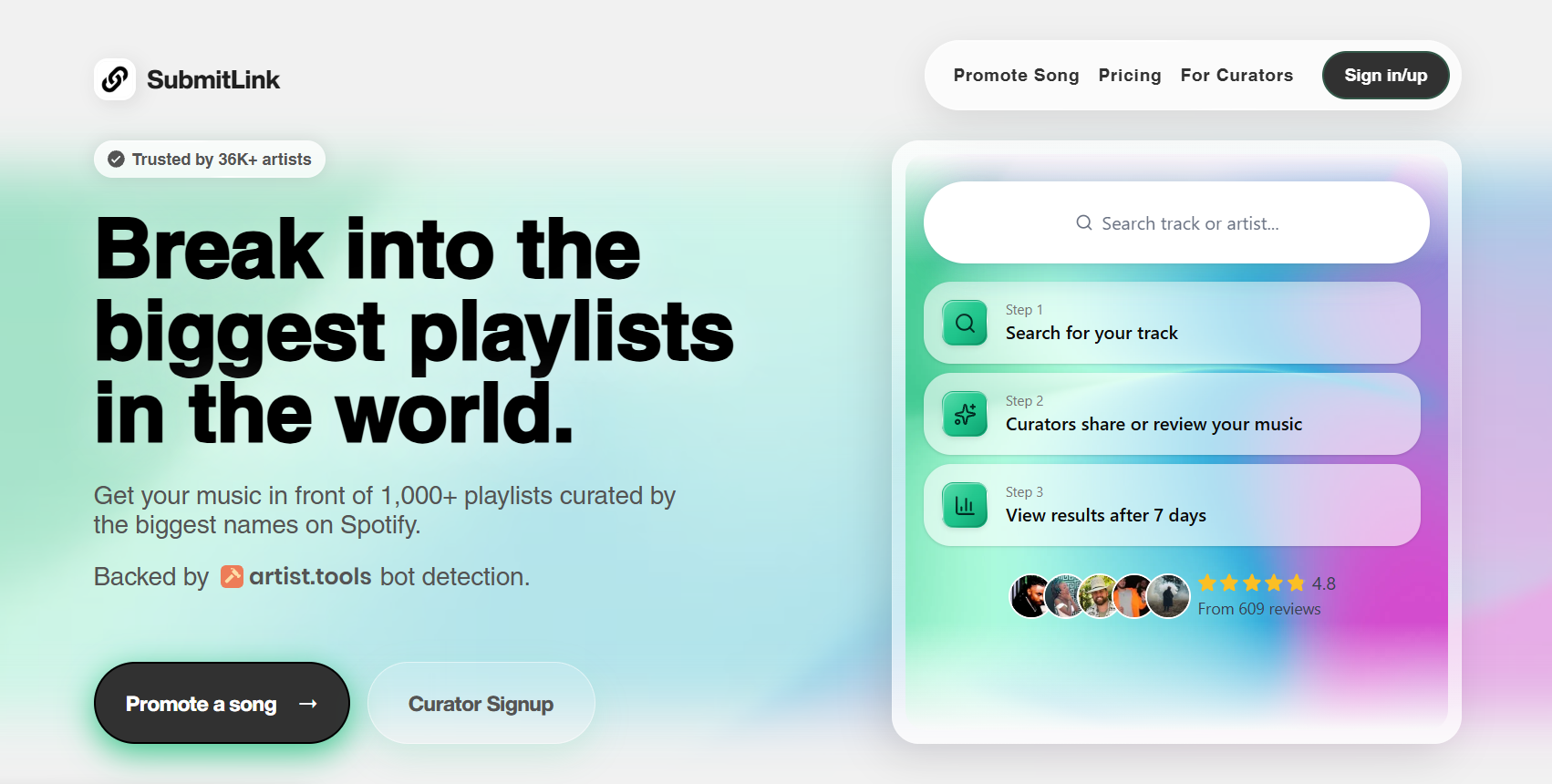
Artists choose suitable playlists themselves, with an auto-match option to find curators by genre. Curators have two earning paths: the Campaign Program (playlist in the catalog, $1–3 per review) and your own submission page, where you set the price yourself — from $0 to $15.
Artists get free and paid sends: free to two playlists a day if the curator enables it; a Premium submission runs $2 to $5 per playlist depending on size and activity. Reviews get 7 days; on rejection the artist receives written feedback, and on a missed deadline the money returns as a credit. Playlists are vetted through artist.tools, filtering out suspicious audiences. There's no hard 1,000-follower rule — you apply and pass the check.
SongRocket
After you connect your account, the playlist goes to manual review; once approved, submissions start coming in. Minimum: 1,000+ followers, an active audience, updates at least once a month, real followers with no fake engagement, and a connected Spotify account. The rate is $1 to $20 per reviewed track. Minimum withdrawal is $20 via Wise, usually 1–3 days; the curator pays the transfer fee.
Orion Promotion
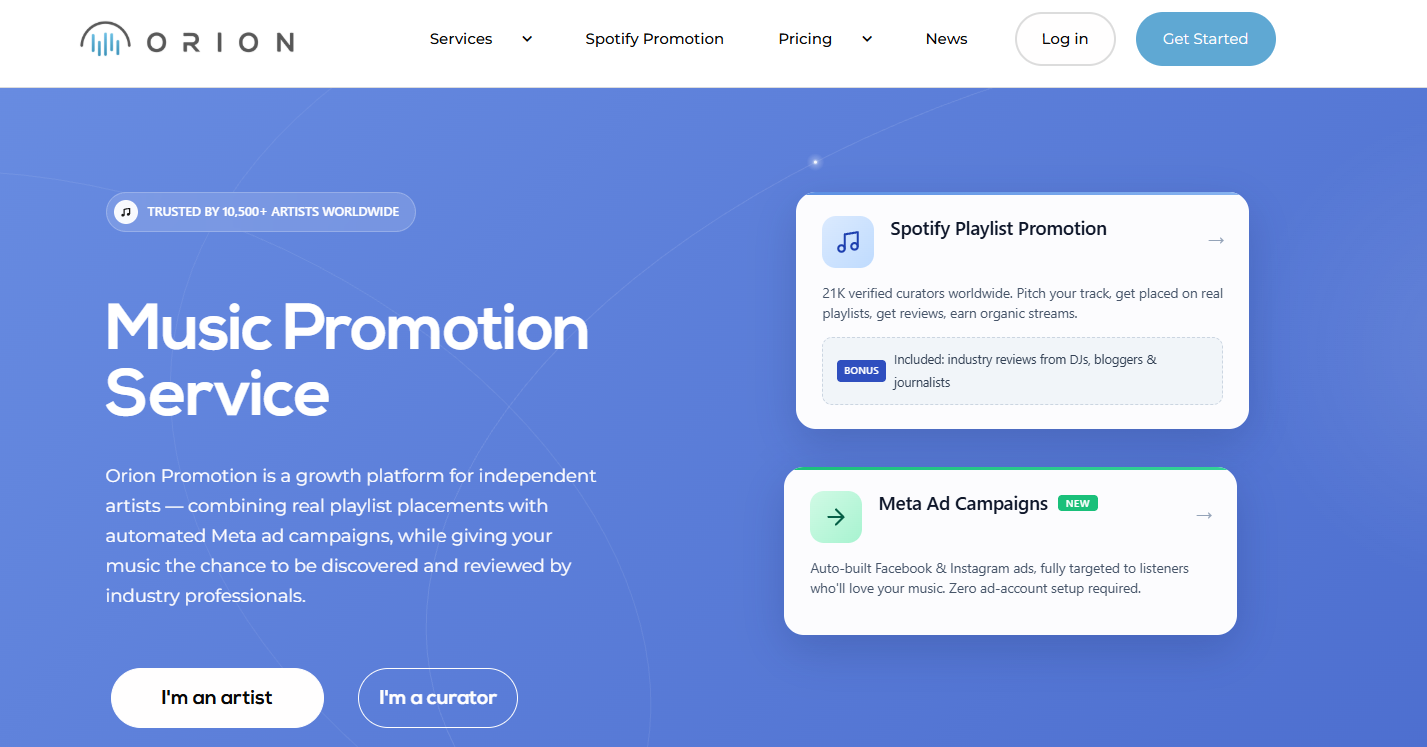
Songs are matched by genre. Requirements: 1,000+ followers, a live audience, organic growth, no bots or artificial plays. It won't accept single-artist, single-album, or single-song collections, playlists built on mutual follows, or ones constantly renamed to chase popular queries.
The rate depends on an internal rating — 15 levels, $1 to $14 per track; points come from followers and the results you deliver for artists. Payouts are weekly, minimum $20, to a bank account or crypto wallet (bank transfers via Wise). At signup, curators pass a KYC check and connect their Spotify account to Orion for playlist verification.
WallStream
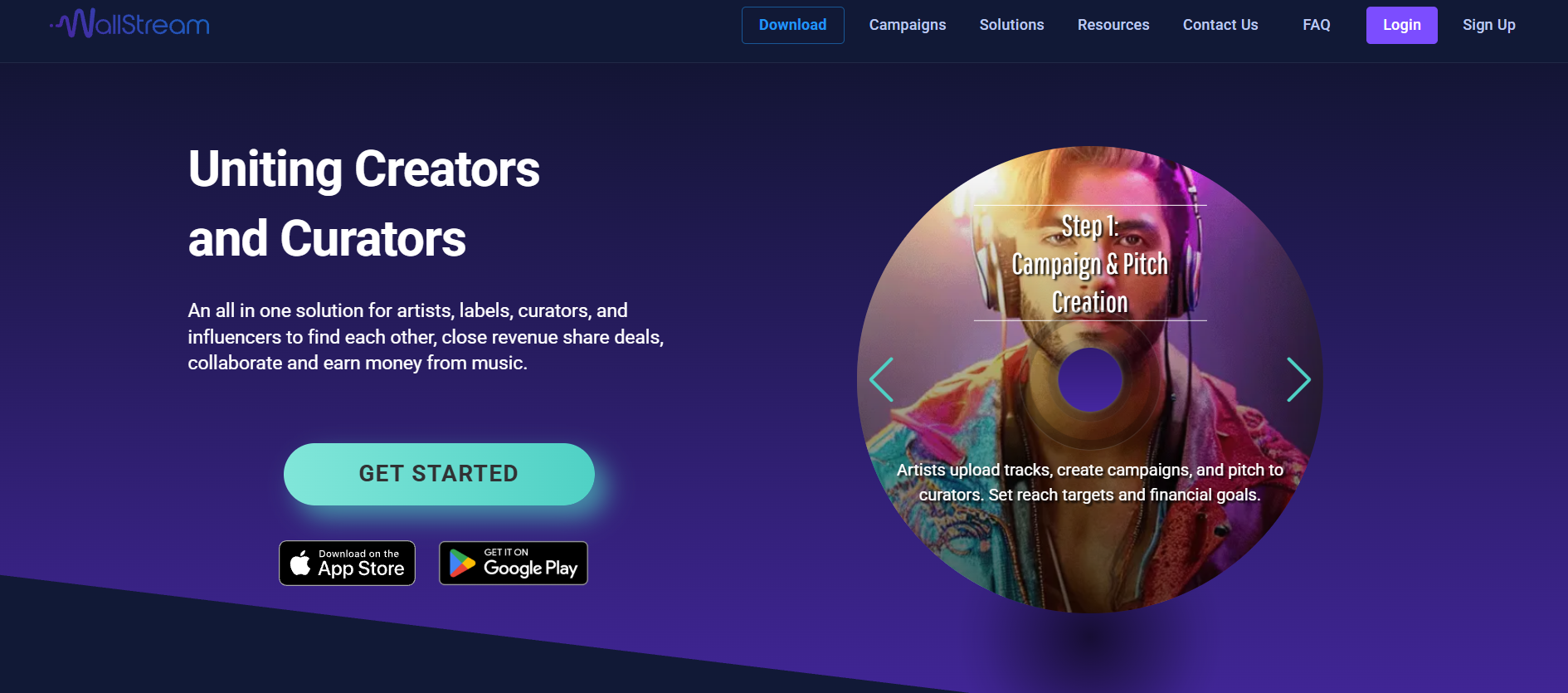
A slightly different model: the curator can charge for the review and, with an artist they like, negotiate a share of future royalties. The artist sends a track → the curator listens and decides whether it's worth working on → if so, both sides agree on promotion terms, the curator's share, and its duration → the curator then earns their percentage of the royalties the track generates. You set the review fee yourself; the percentage and payout window are negotiated per deal. The Scout section lets you find interesting tracks yourself and pitch collaboration to their creators. Income here is less predictable but potentially longer-lived: if a song takes off, the royalty share keeps trickling in.
The practical takeaway: run several platforms in parallel. Submissions arrive unevenly across services, rise and fall with the season and artist activity, and a mix of platforms smooths those dips and raises your total income from the same playlist.
Automation with AI agents and the Spotify API
Busywork is the real enemy of this model. Manually refreshing a dozen playlists, reconciling submissions, hunting for duplicates, tracking deadlines — it all eats the very time the "passive" asset was supposed to free up. Most of it can be offloaded through the Spotify Web API, and you don't have to code it yourself — you can hand the work to an AI agent (for example, in Google Antigravity or ChatGPT's work mode).
The flow is the same either way:
- Open a project in Antigravity or ChatGPT Work.
- Ask the agent to build a Spotify playlist manager and to state the Redirect URI it will use.
- Go to the Spotify Developer Dashboard, click Create app, enter that Redirect URI, and choose Web API.
- Get your Client ID and Client Secret.
- Hand them to the agent — it'll write the values into the config itself.
- Run the manager and authorize account access once.
- From then on, manage everything with plain commands in chat.
Setting up the app. In the Spotify Developer Dashboard, under the right account, create an app: a clear name, Web API type, the Redirect URI from chat. After saving, copy the Client ID; the Client Secret is in the app settings. New Web API apps require a Spotify Premium account. The values are usually stored in a config like this:
SPOTIFY_CLIENT_ID=
SPOTIFY_CLIENT_SECRET=
SPOTIFY_REDIRECT_URI=
Then you just tell the agent something like: "Connect my Spotify via the Web API and set up playlist management. I'll send the Client ID and Client Secret — configure everything, run the authorization, and to confirm, show me my playlists." The agent launches the auth flow; you open the link, approve access, and return to the project. You don't have to reconfigure the connection on every run.
Managing playlists after connection comes down to ordinary requests:
- "Create a private playlist Night Coding and add these 30 tracks."
- "Find duplicates in the Deep Focus playlist."
- "Show playlists that haven't been updated in over two weeks."
- "Update names and descriptions from this table."
- "Remove tracks that have been in the playlist for more than 60 days."
- "Move five new tracks to the top."
- "Back up the tracklist before making changes."
- "Compile a report across all playlists."
The agent hits the Spotify API and makes the changes. The same agent is handy for analytics too: consolidating submissions from every curator platform into one table, spotting repeat sends of the same track, reminding you about 7-day submission deadlines. That's how you run a portfolio of dozens of playlists without drowning in manual work.
Promoting your playlists
The asset needs a genuine, active audience — otherwise the curator platforms simply won't approve it. Three working approaches: SEO inside Spotify, organic content, and paid ads.
SEO inside Spotify
People search for music by genre, mood, or situation: night coding music, dark ambient for reading, indie night drive, minimal techno for work. You build dedicated playlists for those queries. Ranking is influenced by the title, popularity, and the specific user's listening history, so results differ per person. Start with narrow queries like minimal electronic for coding at night — less competition there.
You can offload the grunt work to the agent: "Generate 50 ideas for Spotify playlists in electronic music — genre, mood, activity, time of day, situation; separately, flag the narrow, low-competition ones." Then have it check the ideas against Spotify search and see what already ranks. Good queries are ones where user playlists already appear but there's still room for a new entry. Keep the title short and self-explanatory (Night Coding — Electronic Focus, Dark Ambient for Reading), and put the mood, genre, and situation in the description.
Filling can go to the agent too: add a few dozen tracks, remove duplicates, and put the most relevant ones first — listeners decide whether to stay based on those top positions. Build playlists as private, check names, descriptions, tracks, and covers, then publish. Mind the overall limit of around 11,000 playlists per account and the API's rate limits. After publishing, watch how it behaves in search: the first listeners almost always have to come from outside, and from there you can see whether the playlist starts growing on its own. Reinforce winning themes with traffic; rename, rebuild, or replace weak ones with new hypotheses.
Organic content (free traffic)
The main platforms are TikTok, Instagram Reels, and YouTube Shorts; one playlist can run across all three. Build the content around the playlist's theme. For Night Coding Music that could be "3 tracks for working past midnight," "vocal-free music when you need to focus," "what to put on for a late coding session," or a weekly finds series.
Test formats in parallel: track-name videos, carousels, short clips, videos with a strong first frame. More to try:
- Recurring series — "3 tracks of the week," "what to play at night," "new finds." No reinventing the format each time.
- Single-track videos — sometimes one strong song hooks better than the whole playlist, and the clip funnels into it.
- Artist collabs — after adding a track, tag the musician, propose a joint clip, or hand them ready-made material to repost.
- Separate accounts per theme — one for night coding, one for dark ambient, one for indie drive.
- Repeating winners — relaunch a clip that worked with a new first frame, text, tracks, or background.
- Listener-POV content — not "follow my playlist," but "what I put on when I work at night."
- Trend-based edits — ride current memes, visuals, and editing styles, adapting them to your theme.
Reddit works as an extra source: topic-driven posts (genre breakdowns, music finds, results of your own experiments), with the Spotify link dropped into a genuinely relevant post rather than spammed everywhere.
Paid ads
The main channel for paid growth is Meta Ads (Instagram and Facebook). It's where most people get their first followers and scale the winning playlists. The same set of tracks can be framed differently: music for working at night, reading background, electronic music for a drive, a rainy-evening mix. The creative's angle heavily affects cost per follower — nearly identical playlists can show markedly different CPAs purely because of a different framing.
Run several creatives in parallel — within a couple of days you'll see which actually drive people into the playlist. Route traffic through a landing page between the ad and Spotify (SubmitHub Links or Hypeddit work well): put a Spotify button on the page and install the Meta Pixel, so you count actual playlist visits and optimize the ads for those rather than for cheap ad clicks. Hypeddit provides smart links, tracking pixels, and conversion events for exactly this.
You don't need a big budget to start — about $4–5 a day per playlist is enough to test which creatives and audiences yield decent click-throughs within a few days. Judge the ads by Spotify visits and follower growth; cheap clicks on their own mean almost nothing here.
Another route is paid placements with themed accounts, bloggers, and artists: a story, post, or clip linking straight into the playlist. Use a separate link for each placement so you can see how many visits and followers it brought. TikTok Ads, Reddit Ads, and Google Ads can technically drive traffic to Spotify too, but there are far fewer proven setups for growing user playlists specifically — it's reasonable to bet primarily on Meta.
Tracking and metrics
A playlist can look alive by follower count yet earn nothing if the audience is dead. Watch:
- Active-listeners-to-followers ratio — many platforms require at least 1%, but the higher it is, the better your rating and rate.
- Post-add momentum — how many plays and new listeners the playlist delivers after a track is added. This directly drives your tier in ranked services.
- Retention and repeat plays — whether people come back. That's what Spotify reads as a "real" playlist.
- Cost per acquired follower by channel and creative — so you know the true payback on paid traffic.
- Share of submissions cleared — on several platforms it determines your tier and rate (Silver/Gold/Platinum and equivalents).
Keep it all in one table across every playlist and platform — that's precisely the kind of chore worth handing to your AI agent.
Risks and compliance
The model is legal but sensitive to violations, and in 2026 both the platforms and Spotify itself are tightening enforcement harder than before:
- Fake engagement and bots are the top risk. Curator services re-check playlists regularly, including right before payouts. Bots, fake engagement, task services, and mutual listening get accounts closed — often along with an unpaid balance.
- Spotify's rules. You can't charge for guaranteed placement or promise streams. Only the review is paid — stay inside that frame.
- Feedback quality. Copy-paste, templates, and AI-generated text lower your rating, and complaints can claw back payouts. Write substantive feedback in your own words.
- KYC and verification. Some platforms require identity checks and connecting your Spotify account. That's normal — just plan withdrawals under real details.
- Payout holds and limits. Everyone has their own minimums ($20 and up), fees, and timelines (from a couple of days to 10 business days). Factor that into your unit economics.
Treat the account and playlists as an asset that's easy to lose by getting greedy early. Organic growth is slower and costlier than fake engagement, but it's what keeps the whole scheme alive over the long run.
Common mistakes
- Chasing followers instead of activity. 5,000 dead followers are worse than 1,200 live ones.
- Betting on a single platform. Submission flow is uneven — a mix of services gives steady income.
- Skimping on theme and SEO. A playlist with no clear query or situation won't grow organically and stays subsidy-dependent.
- Sending traffic straight into Spotify with no landing page or pixel. Then there's nothing to optimize the ads against real click-throughs.
- Doing everything by hand. Without the API and an agent, a portfolio of a dozen playlists becomes a second job.
- Trying to fake engagement and getting banned — balance included.
Scaling
Once a single playlist runs a stable profit and you understand its economics (cost to reach monetization, payback period, plateau income), the model replicates. You build new playlists for adjacent niches and situations, connect them to the same curator platforms, drive traffic with proven setups, and run the whole portfolio through an AI agent. Some assets will grow, some will stall; you develop the leaders and rebuild the laggards. That's no longer a one-off gig but a system in which inbound traffic is converted, once, into an asset that pays for months.
Conclusion and checklist
Put it all together and you get a clear system: a playlist built for specific demand, grown through Spotify search, short video, and ads, then connected to several curator platforms at once. An AI agent takes on the technical side and the busywork, leaving you to watch the numbers and develop the playlists that actually grow and pay.
A short launch checklist:
- Pick a niche at the intersection of search demand and artist-campaign volume.
- Build a playlist around a specific search query/situation.
- Drive in your first 1,000+ live followers (SEO + organic + Meta Ads via a landing page with a pixel).
- Connect several curator platforms.
- Set up management via the Spotify API and an AI agent.
- Track your metrics, recoup your spend, and scale into a portfolio.
Share this article
Send it to your audience or copy an AI-ready prompt.