Mobile Push vs Web Push: Which One Should You Choose?
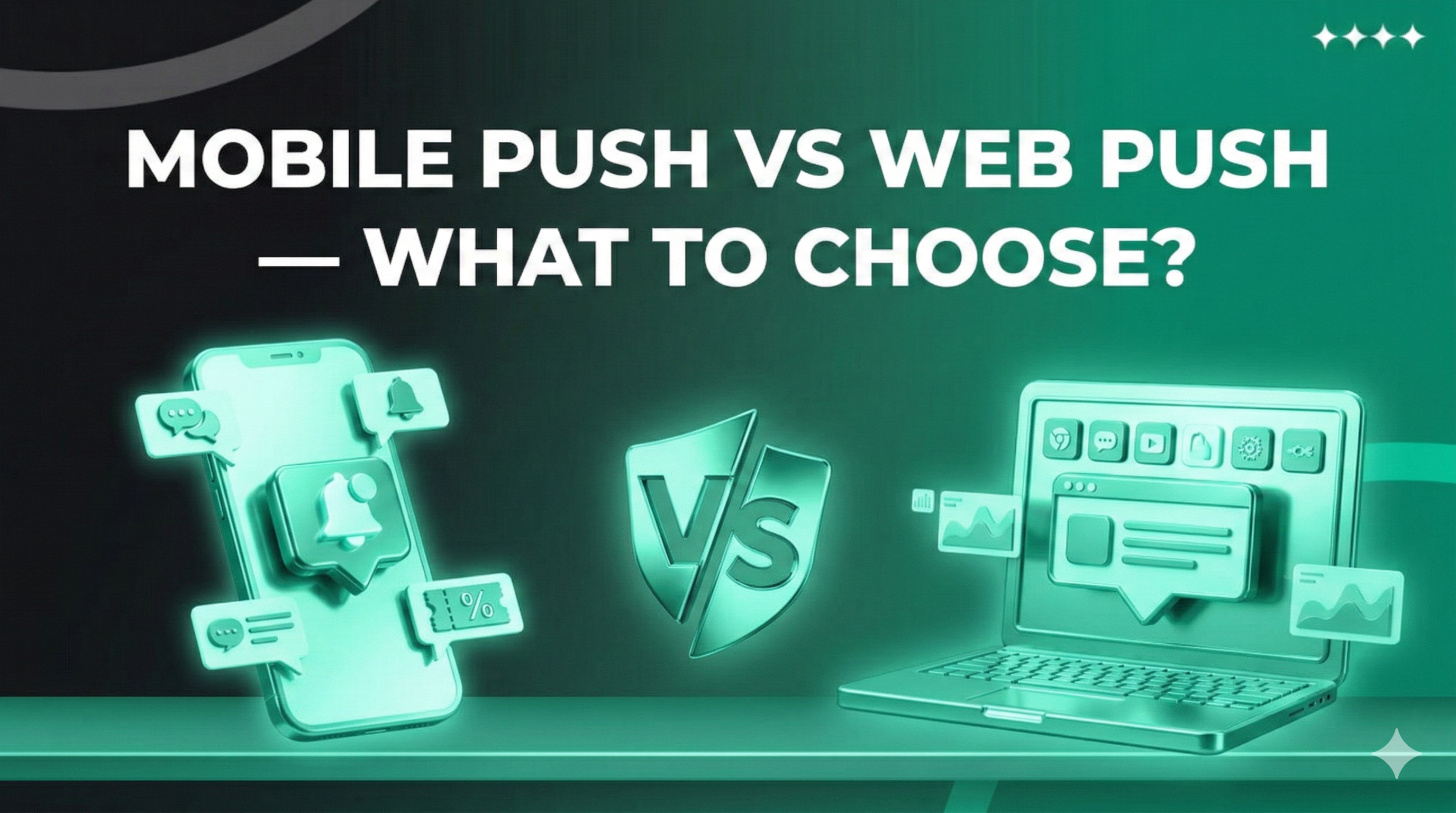
In 2026, push notifications remain one of the key tools for webmasters looking to increase site traffic, subscriptions, and revenue. However, the market offers two main formats: mobile push and web push. Each has its own features, limitations, and effective use cases. Let’s break down which channel delivers the best results and how to build a push marketing strategy.
Key Differences Between Mobile and Web Push
Mobile push notifications are delivered via iOS and Android apps and are available only to users who have installed the app and opted in. This channel is highly engaging: notifications are frequently opened, and click-through rates among active users are high. Mobile push is particularly effective for retaining existing users and increasing their activity.
Web push notifications, on the other hand, work through browsers on desktop and mobile devices. They are available to all site visitors who allow notifications, regardless of whether they have an app. Web push enables rapid audience scaling and growing the subscription base, but engagement is lower, and conversions to purchases or other goals are typically smaller than with mobile push.
In short, the main difference is: mobile push focuses on retaining an already engaged audience, while web push is designed to quickly expand the subscriber base.
What Determines ROI
The return on investment from a push channel depends on three components:
- Reach — how many users receive the notifications.
- Subscriptions — the share of visitors who opt in.
- Conversions and monetization — how many users take a target action: purchase, registration, or subscription.
Mobile push shows high ROI for users who regularly interact with the site or app. Web push allows rapid audience growth, but conversions are generally lower.
Metrics to Track Effectiveness in 2026
Webmasters should monitor:
- CTR (Click-Through Rate): the percentage of users who click the notification.
- CR (Conversion Rate): the percentage converting to a sale, subscription, or other goal.
- Retention Rate: how well subscribers stay engaged over time.
- Revenue per Subscriber: income generated per subscriber.
Pay special attention to the zero-click effect: even if a user doesn’t click, notifications can drive repeat visits and engagement.
Segmenting your audience improves efficiency: separate active and less-engaged users to send targeted notifications, increasing CTR and CR.
Practical Recommendations for Each Format
Mobile Push
- Best for retaining active users.
- Use personalized notifications based on user behavior and interests.
- Integrate AI to predict behavior and suggest content.
Web Push
- Ideal for expanding the subscriber base.
- Set up notification sequences for new and inactive users.
- Experiment with different formats: text, images, CTA buttons.
Combined Strategy
- Web push → attract new users and grow subscriptions.
- Mobile push → retain active users and increase monetization.
- Analyze ROI separately for each channel and adjust strategy in real time.
Conclusion for Webmasters
Choosing a push format depends on your goals:
- Scaling and audience growth → web push.
- Retaining active users and increasing revenue → mobile push.
The optimal 2026 strategy combines both channels with segmentation, personalization, and AI-driven behavior predictions.
Success in push campaigns is no longer about the number of subscribers alone. It’s about engagement quality, precise targeting, and monetization strategy. Webmasters who integrate analytics, personalized workflows, and a combined channel approach achieve sustainable traffic growth and revenue.
Share this article
Send it to your audience or copy an AI-ready prompt.